9 min read
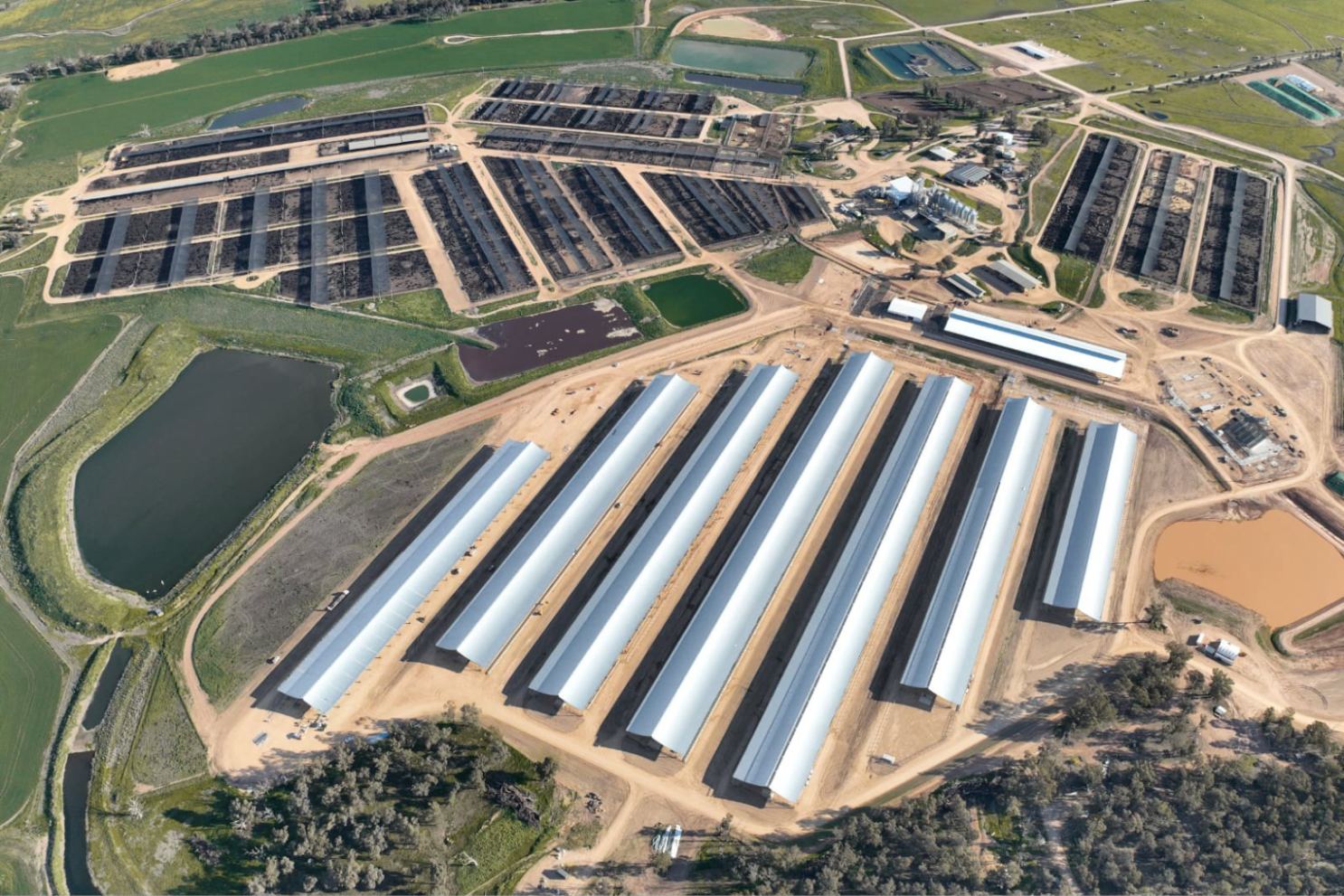
Across Australia, feedlot shade and shelter has moved from being solely an animal welfare standard to a lever for improving performance. As operators have introduced pen covers to meet increasing animal welfare expectations, they have uncovered a range of additional advantages, from better feed conversion ratios and higher carcase weights to reduced odour and effluent.
With that comes a number of questions. What is the best roof profile? How long will it take to pay off the investment? Is shade cloth sufficient? Over the past decade Entegra has designed and built more than 500,000m² of Ridgeback® livestock housing across Australia, and its feedlot clients range from family-owned operations to the country's largest integrated beef businesses. The questions below are among those we receive on a regular basis, and the answers draw on independent research and analysis as well as direct feedback from our clients.
Does covered feedlot housing improve feed conversion and daily gain?
Cattle have a thermo-neutral zone, a temperature range in which no feed energy is spent maintaining body temperature. Time outside it diverts energy from gain to maintenance, and covered housing helps to normalise the environmental extremes that cause this.
Two MLA-funded trials in the New England region of NSW have measured the effect. In the University of New England's trial at Tullimba, cattle under a partial waterproof shelter on a truss frame gained 0.16 kg more per head per day than unshaded cattle and produced carcases 7.2 kg heavier, worth over $63 per head in additional gross return (refs. 3, 4). The trial ran through an unusually cool, wet summer, so the gains mostly reflect wet-weather protection rather than heat load reduction. In the warmer, lower country where most Australian grainfed cattle are finished, from the Darling Downs to the NSW slopes and plains, a roof counteracts both rain and heat, and the gain is typically greater.
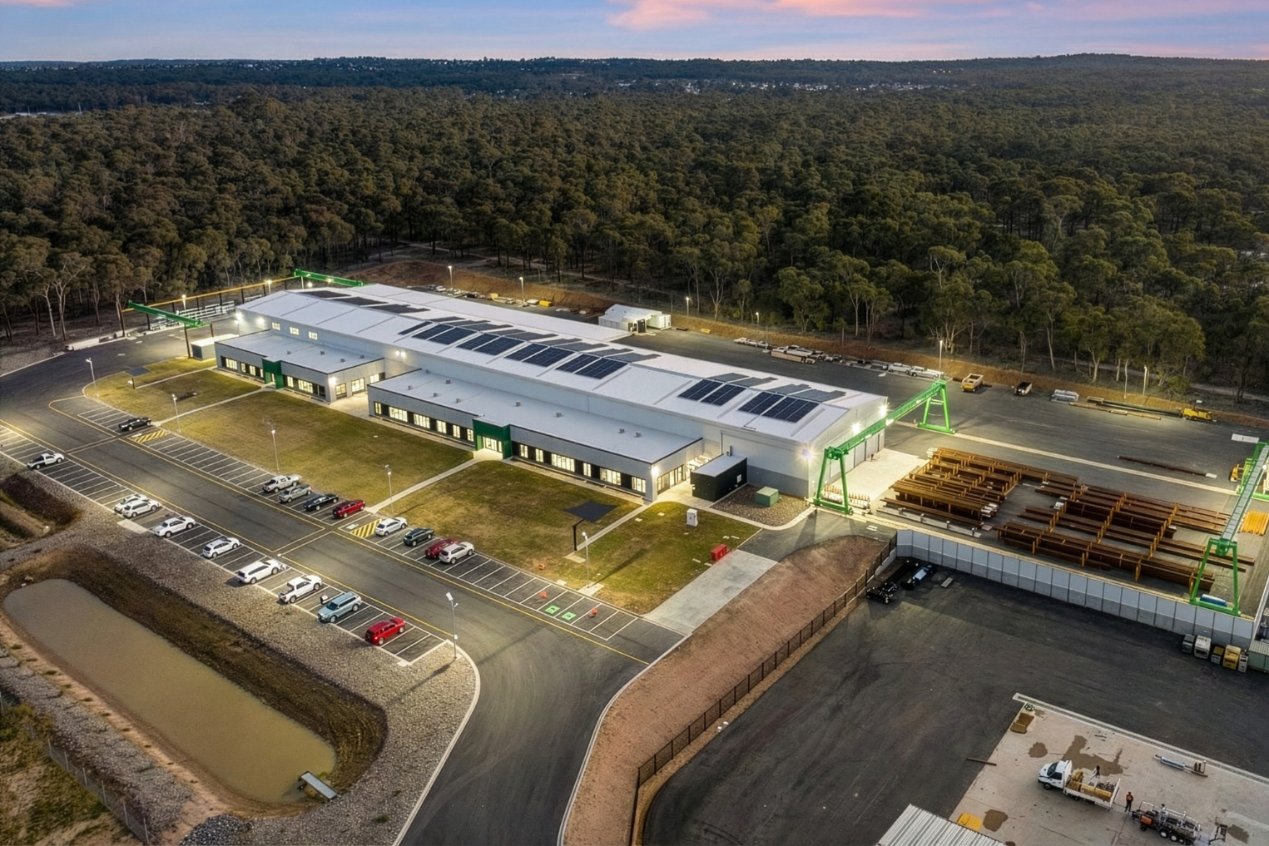
MLA's 2024 evaluation at Rangers Valley (now Stanbroke Rangers Feedlot), 80 km north of Tullimba in the same cool climate, was conducted under a Ridgeback® and recorded cattle consuming 0.45 kg more dry matter per head per day and exiting 11.1 kg heavier in liveweight than cattle in open pens (ref. 2). Beyond the trials, Entegra clients have reported over 0.2 kg more ADG per head under the Ridgeback®, with one reporting 0.3 kg, and Teys Australia reports higher ADG and carcase weights from its 1,200 head Ridgeback® at Charlton, Victoria (ref. 1).
What is the Ridgeback® roof design?
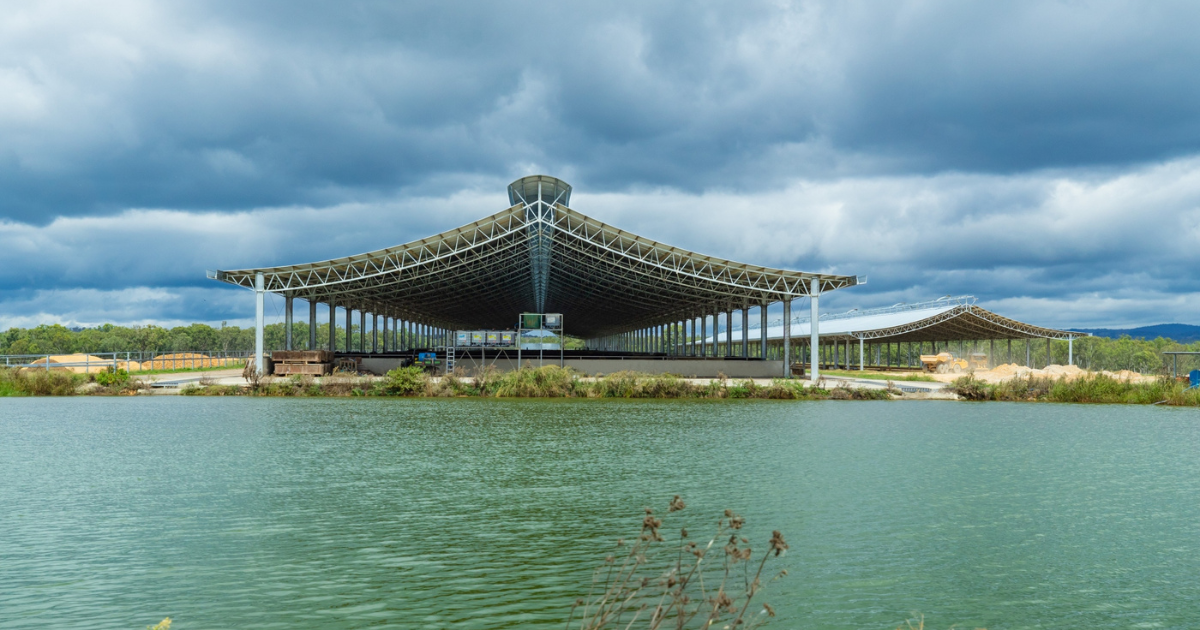
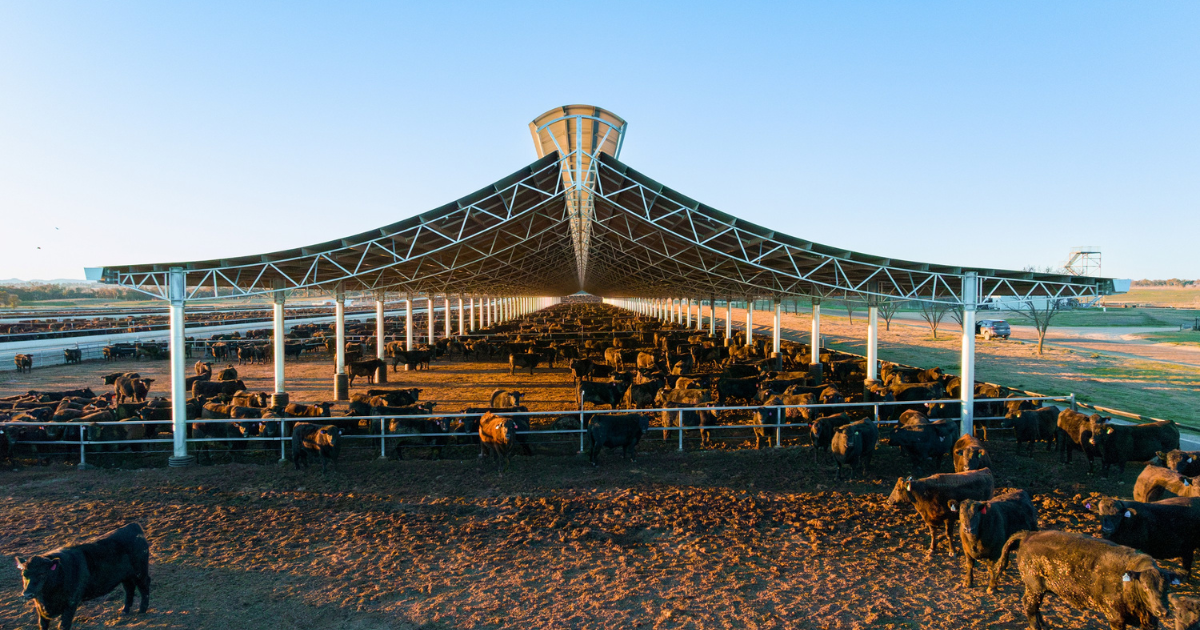
The Ridgeback® is Entegra's patented roof design for livestock housing, engineered to deliver industry-leading results in feed conversion, animal welfare and sustained financial performance. Its roofline drives natural ventilation and a higher rate of air change in the pen at cattle height. The design has been refined over years of work with feedlot operators, veterinarians and environmental specialists, and built for Australia's full climate range, from high-heat northern regions to cold, wet southern winters.
How does the Ridgeback® work?
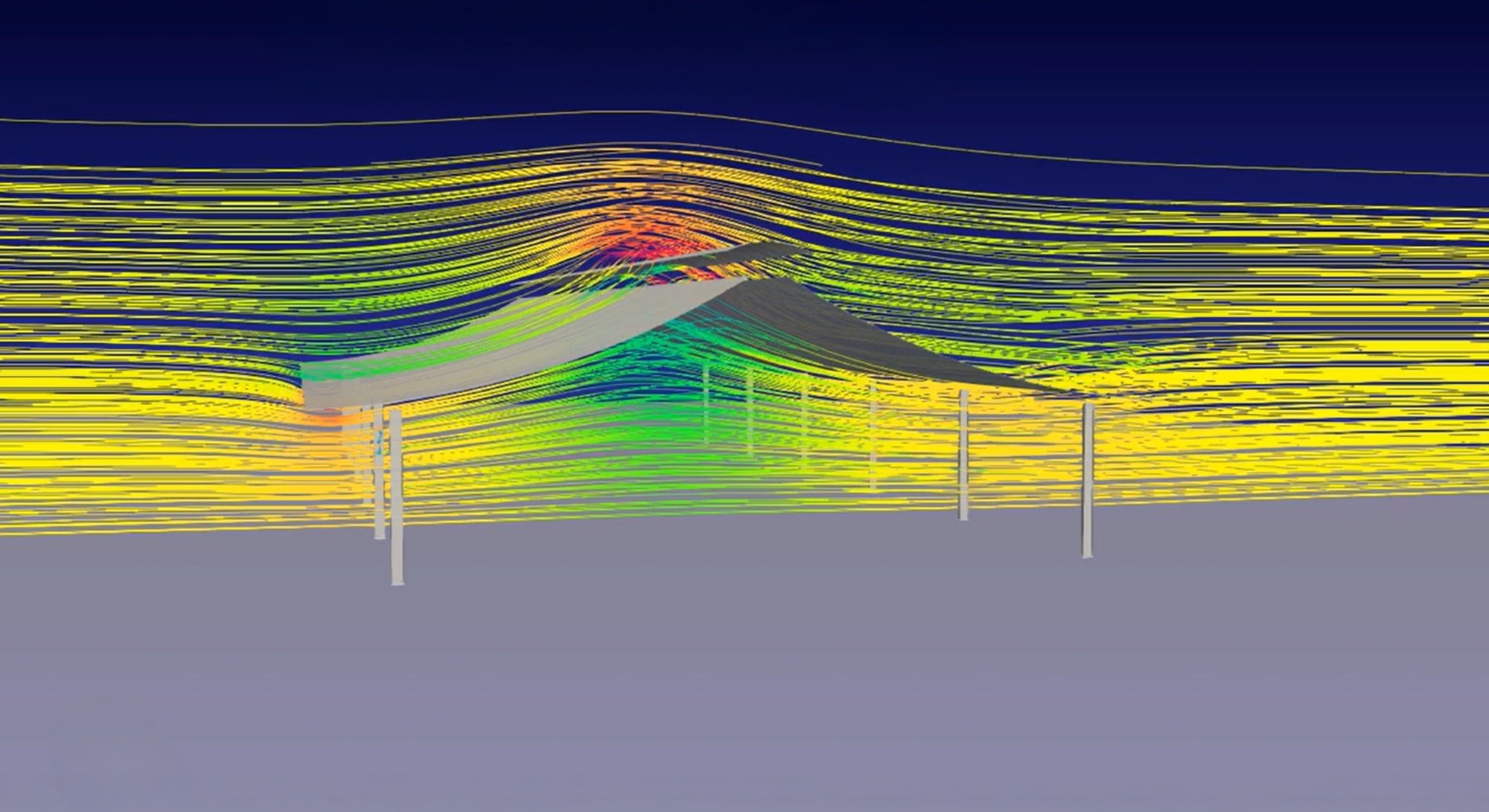
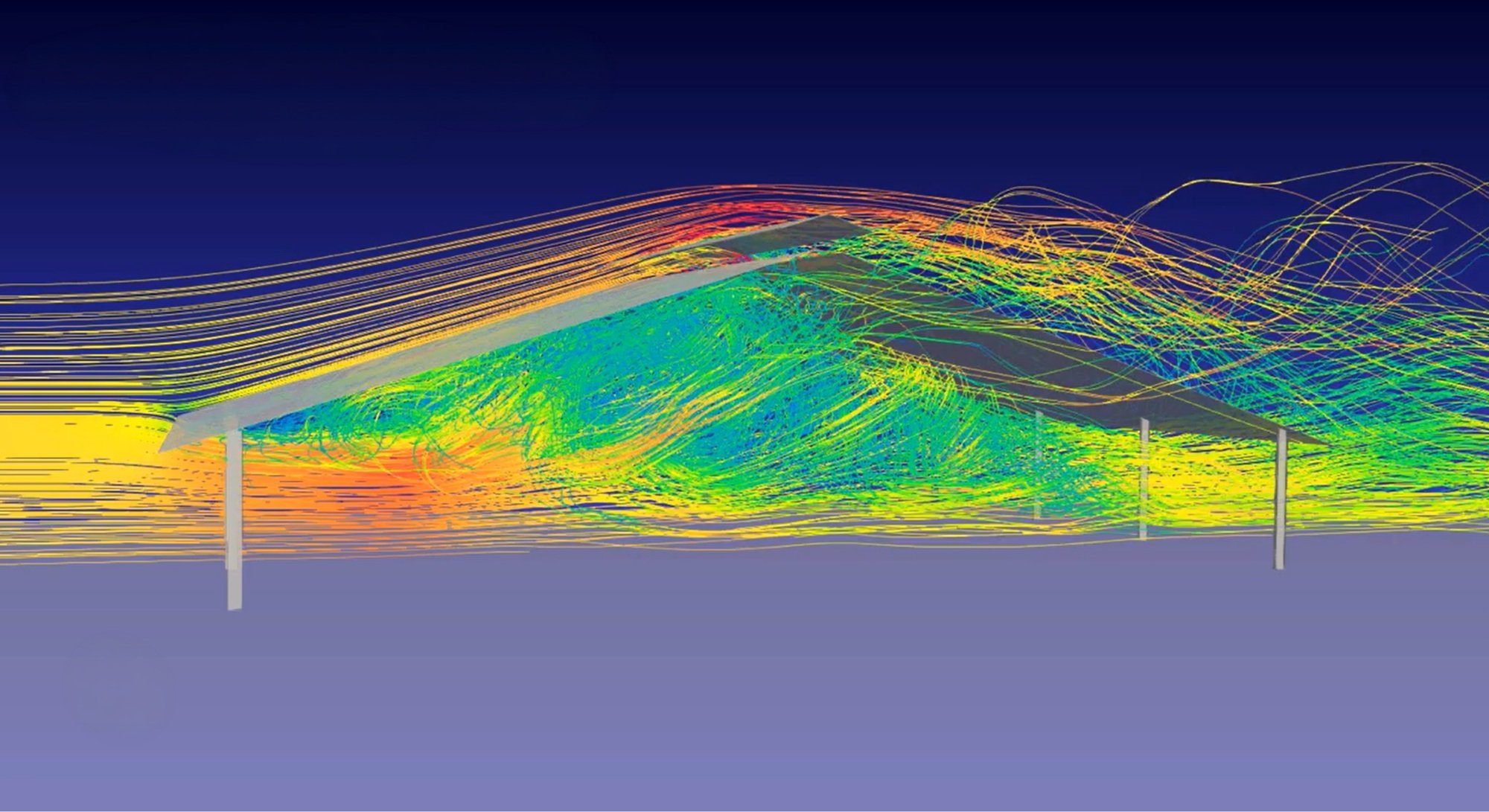
The curved roof works on the same aerodynamic principle as an aircraft wing. As wind passes over it, low pressure forms behind the structure, along the ridgeline and under the leading edge. That pressure difference between the two sides of the pen is what pulls air through it. Thermal buoyancy adds a second mechanism. Metabolic heat from the cattle and heat released from bedding decomposition warm the internal air, which rises and exits through the ridge opening, drawing ambient air in through the open sidewalls.
In independent CFD modelling by E3K of a Ridgeback®, the average internal air velocity exceeded ambient wind speed by 80 per cent in calm conditions of 0.2 m/s. At a moderate 2 m/s the air in the structure was replaced approximately every minute, and the temperature at cattle level remained near ambient despite roof surface temperatures of 65 to 70°C (ref. 6).
Shade cloth or a waterproof structure?
Shade cloth is a sound first step, and the reason most Australian feedlot cattle now have shade. Its limitation is that it addresses heat load only. Rain, wind and cold pass straight through, so in wet weather cattle stand in the same mud as in an open pen and the floor degrades at the same rate. At Tullimba, MLA found no performance difference between shade cloth and open pens in a mild summer (ref. 3).
Shade cloth has a lower upfront cost, but its management, maintenance and eventual replacement need to be considered. Life span is roughly 5 to 15 years depending on location, and shorter in windy sites. Woven cloth accumulates dust until it becomes impermeable, can harbour birds and rodents, and needs staff to monitor tension, make repairs and clean it. Low clearance restricts machinery access and exposes the cloth to exhaust damage, and cattle crowding into the narrow strip of shade wear down the pad and floor beneath it. It does little for cold or wet seasons and has no positive impact on water capture, effluent, odour, pen floor maintenance or staffing.
Gable roof or Ridgeback®?
A standard gable roof protects cattle and the pen floor from rain and direct sun, but its ventilation depends on prevailing wind and thermal buoyancy. In CFD modelling of a traditional barn, air entering the pen loses momentum beneath the ridge and becomes turbulent, so the centre of the pen is poorly flushed and respiratory irritants, moisture and heat remain at cattle level.
The Ridgeback® addresses this limitation directly. The curved roof profile creates a strong pressure differential across the structure, which pulls air steadily across the full width of the pen. In the same CFD modelling, the Ridgeback® delivered 14 air changes per hour against 11.5 for the gable in near calm conditions, more than 20 per cent greater ventilation, and maintained that margin at moderate wind speed (ref. 5). On the ground, the feedlot manager at Rangers Valley at the time noted far less passive airflow and an ammonia smell in the older gable pens, neither of which has been observed under the Ridgeback®, and at Canning Downs South the Shaw family describes a draft inside the pens even on a still day. The wider effects of that air exchange are examined in the sections that follow.
What else changes under the Ridgeback®?
Water capture and consumption
Covered housing improves a feedlot's water position on both the supply and demand side. Rainfall that would otherwise cross the pen floor and leave as effluent is captured from the roof and stored as stock water. Cattle protected from sun and weather consume less, and covered troughs stay cleaner and lose less to evaporation. At the Glen Innes site, the roof captures over 10 million litres of rainwater annually, and the trial recorded cattle under cover drinking 5.2 L per head per day less than those outdoors (ref. 2). At Teys Charlton, roof capture supplies approximately 20 per cent of drinking water for cattle in the covered pens (ref. 8), and an NSW operation running around 3,000 head under a Ridgeback® reports roof run-off provides around 100 days of water supply on 425 mm average rainfall. At the other end of the range, the NTLEA Berrimah Export Yards in Darwin receive around 1,500 mm each wet season, yet the covered pens stay dry enough for machinery to operate year-round.
Pen floors and effluent
Pen floor maintenance is one of the largest recurring costs in an open feedlot. Moisture permeates the surface, the floor degrades, and repairing it means material, machinery, fuel and labour. Under cover the cycle slows considerably. Teys Charlton has required zero pen floor maintenance in three years under its Ridgeback®, previously an annual event (refs. 1, 8), and a 3,000 head NSW operation has doubled its clean-out interval from four weeks to more than eight.
Manure benefits from the same cover. Protected from rainfall, it carries a higher dry matter, so there is less water to cart and it is cheaper to process into a saleable product. Rangers Valley reports lower fuel and labour costs from carting less wet manure, and Canning Downs South composts its bedding and returns it to the paddocks that grow its feed. Dry bedding also limits dag formation, removing a processor penalty and the labour of washing cattle before slaughter.
Odour and air quality
Feedlot odour is driven primarily by the anaerobic breakdown of wet manure. A covered, bedded pen keeps the surface dry enough to limit it, and under the Ridgeback® the air is continually exchanged, so what odour is produced is removed rather than trapped. Odour modelling commissioned by Teys at Charlton found lower odour from its bedded covered pens than from wet outdoor pens, with twice as many cattle under cover (ref. 1), and Elbow Valley Beef reports no odour and far fewer flies across its fully covered pens.
Air exchange also governs air quality. In a poorly ventilated pen, ammonia, dust and moisture accumulate and respiratory pathogens survive far longer in the humid, stagnant air. The 20 per cent greater ventilation under the Ridgeback® reduces the irritants and pathogen load that predispose cattle to BRD, the leading cause of morbidity and mortality in Australian feedlots.
Animal welfare
Teys reports greatly improved hospital recovery rates at Charlton, particularly for foot and lameness issues, with half the building allocated to hospital and treatment pens, cattle recovering on a dry bedded surface and fewer infections recorded (ref. 1). The Rangers Valley evaluation found bedding had a significantly positive effect on musculoskeletal health in long-fed Angus cattle, reducing morbidity and cull rates (ref. 2). Another client reported that during an extreme heat event in southern Queensland, a Ridgeback® protected all cattle while the adjacent open pens lost 44 head.
Elbow Valley Beef, which runs its entire 9,400 SCU Canning Downs South feedlot under six Ridgeback® structures, reports a noticeable difference in body temperature and comfort between cattle in an outside pen and cattle under cover in hot conditions, along with reduced panting, clean coats and lower BRD, which the family attributes to the covered pens and ration combined (ref. 7).
Meat quality
Genetics, ration and days on feed give cattle their marbling and eating quality potential. The environment across the feeding period decides how much of it is delivered. Grainfed cattle can spend anywhere from 70 to more than 500 days on feed, and every heat event, wet spell or period of mud in that time is a day cattle eat less, gain less and carry more stress, which shows in carcase weight, marbling and MSA compliance. Under the Ridgeback®, cattle are protected for the full feeding period, and the results are showing at the processor. One Wagyu operation has raised marbling scores from mid-7s to high-8s on the same ration. Elbow Valley Beef reports marbling improving with each kill, and in 2025 Canning Downs South was Queensland's grainfed winner at the MSA Excellence in Eating Quality Awards, with 99 per cent compliance and an average MSA Index of 65.97, close to the top 1 per cent of producers nationwide (ref. 7).
Staffing
Covered housing reduces labour requirements per head. Higher stocking density means fewer pens to monitor for the same number of cattle, the dry, firm pen surface reduces floor maintenance, and calmer cattle are easier to handle. Bunks and troughs under cover also need cleaning and refilling less often. Teys reports that recruiting horse-based livestock staff has been a challenge at Charlton, and the covered pens have allowed cattle to be monitored by staff on foot instead (ref. 1).
Approvals and footprint
Odour is the basis of the separation distances a feedlot must meet under the National Guidelines for Beef Cattle Feedlots in Australia, and it is one of the first things a regulator assesses in a new licence or an expansion application. A covered pen that holds odour below an open pen at twice the stocking density, as the Charlton modelling showed, strengthens an operator's position with the approving authority.
The second lever is land. Covered, bedded pens operate at a lower area per head than open pens, with Charlton stocked at 6 m² per head, which allows more cattle on the same licensed footprint. Teys notes the covered pens allow it to increase numbers without expanding its footprint (refs. 1, 8). For an operation that cannot expand its site, or does not wish to reopen its approvals in order to do so, this is often the factor that decides the investment.
How long does covered feedlot housing take to pay back?
Across Entegra's Ridgeback® projects, the payback period is typically two to five years depending on climate and site conditions, and one Victorian operator reported the structure paid for itself within 12 months.
No single factor decides a feedlot's profitability, and no single factor decides the payback of covered feedlot housing. Weight gain is only one of the variables a Ridgeback® changes. Among others, it also affects head carried per site, mortality and morbidity, dag penalties, feed wastage, quality premiums, staffing, cleaning, manure value and water.
The investment has its own costs, chiefly a higher capital outlay than shade cloth and the sourcing and spreading of bedding, and both are counted in the return analysis.
If you are weighing up covered housing and want to see the return for your own site, the Ridgeback® Return Analyser models your operation on more than 40 inputs, from rainfall, SCU and heat events to feed and livestock prices, and returns an estimated payback period for your feedlot.
Your Operation. Your Numbers. Your ROI.
Book an obligation-free consultation to see tailored projections using the Ridgeback® Return Analyser. Model key inputs and performance metrics to show the ROI the Ridgeback® could deliver for your operation.
References
-
Meat & Livestock Australia, Wet winters no match for bedded sheds, January 2026
-
Meat & Livestock Australia, B.FLT.4020 Evaluation of partial pen coverage with shelter in a commercial feedlot, June 2024
-
Meat & Livestock Australia, B.FLT.4009 Evaluation of shade and shelter solutions in a southern Australian feedlot, 2023
-
Beef Central, Study finds significant production gains with shedded feedlot shades, February 2022
-
SLR Consulting Australia, Self-Ventilating Farm Shed: Natural Ventilation CFD-Based Study, Report 610.15492-R1, August 2015
-
E3K, CFD Modelling of Natural Ventilation of a Dual Ridgeback® Livestock Shelter, Ref RGB:DBG:VLK:216310, June 2016
-
Meat & Livestock Australia, The secret behind a 99% MSA compliance rate, July 2026
- Beef Central, Teys's feedlot shed proving successful after three years, September 2025

